What's the real difference between a pergola and a ramada?
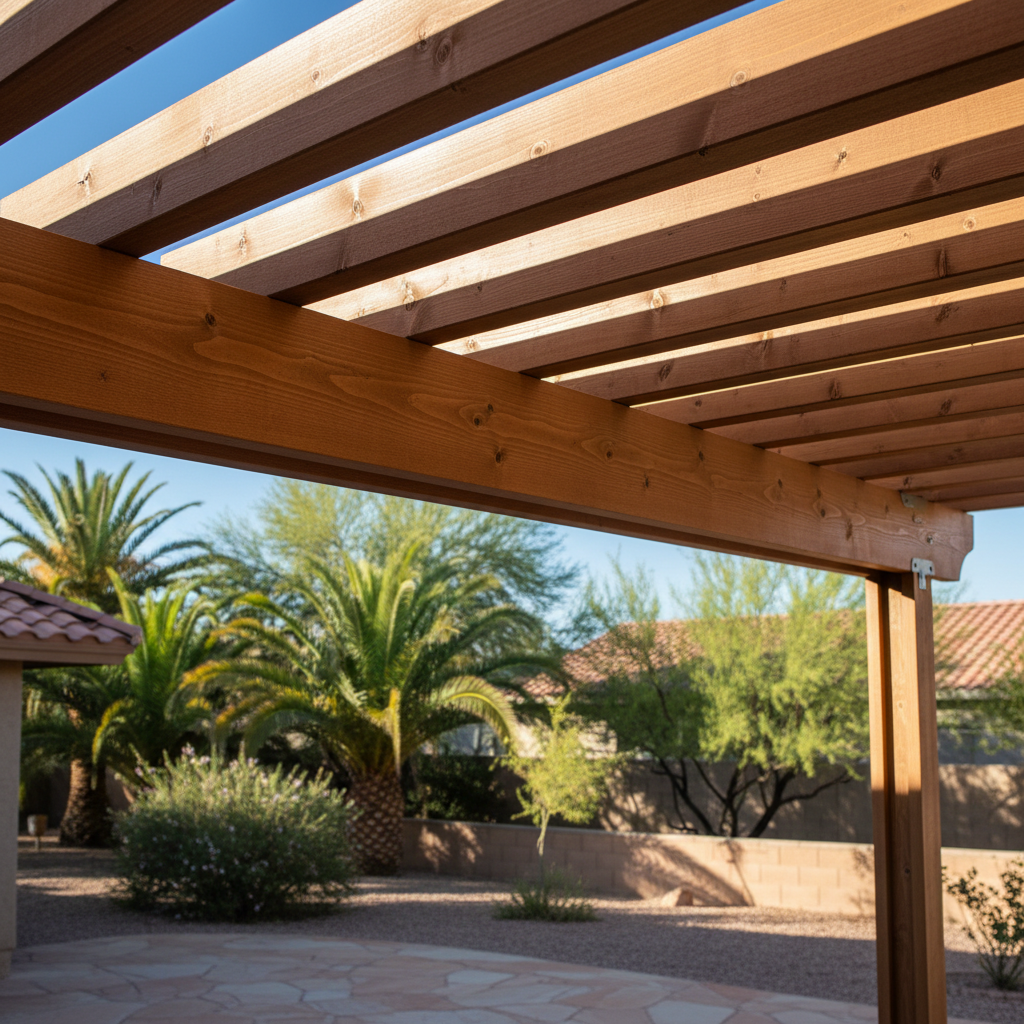
This is probably the question I get asked most often, and it's a good one! People here in Arizona, especially, tend to use these terms interchangeably. But there's a key difference, and it really comes down to the roof. A pergola usually has an open, slatted roof. Imagine a series of beams and rafters; they give you partial shade, letting some sun peek through. It's perfect for that dappled light effect, great for supporting climbing plants, and it helps define an outdoor space without completely blocking out the sky.
A ramada, on the other hand, typically features a solid roof. This could be shingles, corrugated metal, or even a full wood roof. The main idea behind a ramada is to give you full shade and often protection from rain. So, if you're picturing yourself sitting outside during a monsoon downpour and staying totally dry, you're definitely thinking ramada. If you prefer a more open, breezy feel with some sun protection, a pergola is probably what you're after. Both make awesome additions, no doubt, but they really do serve slightly different purposes under our intense Chandler sun.
Do I need a permit to build a pergola in Chandler?
Yep, you most likely do. This is one of those things people sometimes try to skip, but believe me, it can lead to a real headache down the road. Here in Chandler, if your pergola measures over 200 square feet, or if it's actually attached to your house, or if it's taller than a certain height (usually somewhere around 10-12 feet, but you should always double-check the exact city codes), then you're going to need a building permit. Even if it's freestanding and smaller, it's always smart to check with the City of Chandler's Planning & Zoning Department. They're pretty clear about these rules.
Going through the permit process makes sure your structure gets built to code. That means it's safe and won't, say, fall over during one of our summer dust storms. Plus, if you ever decide to sell your house, an unpermitted structure can become a big problem during inspections. It might seem like a bit of paperwork, but it's totally worth doing it right the first time. At Chandler Deck Creations, we handle all that permit stuff for our clients, so you don't have to sweat it.
What are the best materials for a pergola in our Arizona climate?
Our Chandler climate, with its blazing sun, dry heat, and sometimes heavy rain, is really tough on outdoor structures. For pergolas, you've got a few main options. Wood is a classic choice, and popular types include cedar, redwood, or pressure-treated pine. Cedar and redwood naturally resist rot and insects, and they look beautiful. But, they do need regular sealing or staining to protect them from UV damage and keep them from graying out.
Then there's aluminum. This is a fantastic option if you're looking for low maintenance. It won't rot, warp, or get eaten by termites, and it holds up incredibly well to the sun. It's usually powder-coated, which gives you a durable finish in all sorts of colors. And finally, composite materials. These are made from a mix of wood fibers and plastic, giving you the look of wood with way less upkeep. They resist fading, insects, and moisture. Each material has its ups and downs, but for something that lasts a long time and needs minimal care in our desert environment, aluminum and composite often come out on top.
How much shade will a pergola actually provide?
That depends entirely on how it's designed. A traditional pergola with widely spaced rafters might only give you 40-60% shade. It's more about creating a visual boundary and some nice dappled light. If you want more shade, you can add purlins – those are smaller beams that run perpendicular to the rafters – closer together. Or, you could incorporate shade sails, retractable canopies, or even climbing vines like bougainvillea or grapevines. For maximum shade, you'd really be looking at a ramada, but a well-designed pergola can still offer significant relief from the sun, especially if you orient it correctly to block those harsh afternoon rays. That's key, isn't it?
Can I attach a pergola to my house, or does it have to be freestanding?
You can absolutely do both! An attached pergola is often called a 'lean-to' style. It uses your house wall for support on one side, which can save on materials and make it feel like a natural extension of your home. This is great for covering a patio right outside your back door. Freestanding pergolas, on the other hand, stand on their own, supported by four or more posts. You can put them pretty much anywhere in your yard – over a pool deck, a separate seating area, or even tucked away in a garden. The choice really comes down to your backyard layout and what kind of outdoor space you're trying to create. Just remember, if it's attached, you'll definitely need that permit.
What about maintenance for a pergola in Chandler?
Maintenance varies a lot, depending on the material. A wood pergola will need regular cleaning, and depending on the type of wood and finish, you'll want to re-stain or re-seal it every 2-5 years to protect it from the sun and prevent rot. You should also check for any signs of insect damage, especially if it's untreated pine. Aluminum pergolas are super low maintenance; usually, just a good wash with soap and water once or twice a year is all they need to keep them looking fresh. Composite pergolas are similar – a simple cleaning will do the trick. Regardless of the material, it's a good idea to inspect all connections and fasteners annually to make sure everything's still tight and secure, especially after our windy season.
How long does it take to build a pergola?
The timeline can vary quite a bit, depending on the size, how complex the design is, and the materials you choose. A small, simple, freestanding pergola might be built in just a day or two. A larger, custom-designed attached pergola with intricate details could easily take a week or more. That's just the construction part, though. You also have to factor in design time, ordering materials, and, critically, permit approval. Permit times in Chandler can sometimes add several weeks to the overall project timeline, so it's really important to plan ahead. When I give you an estimate, I always lay out the full timeline, from design to final inspection, so you know exactly what to expect.